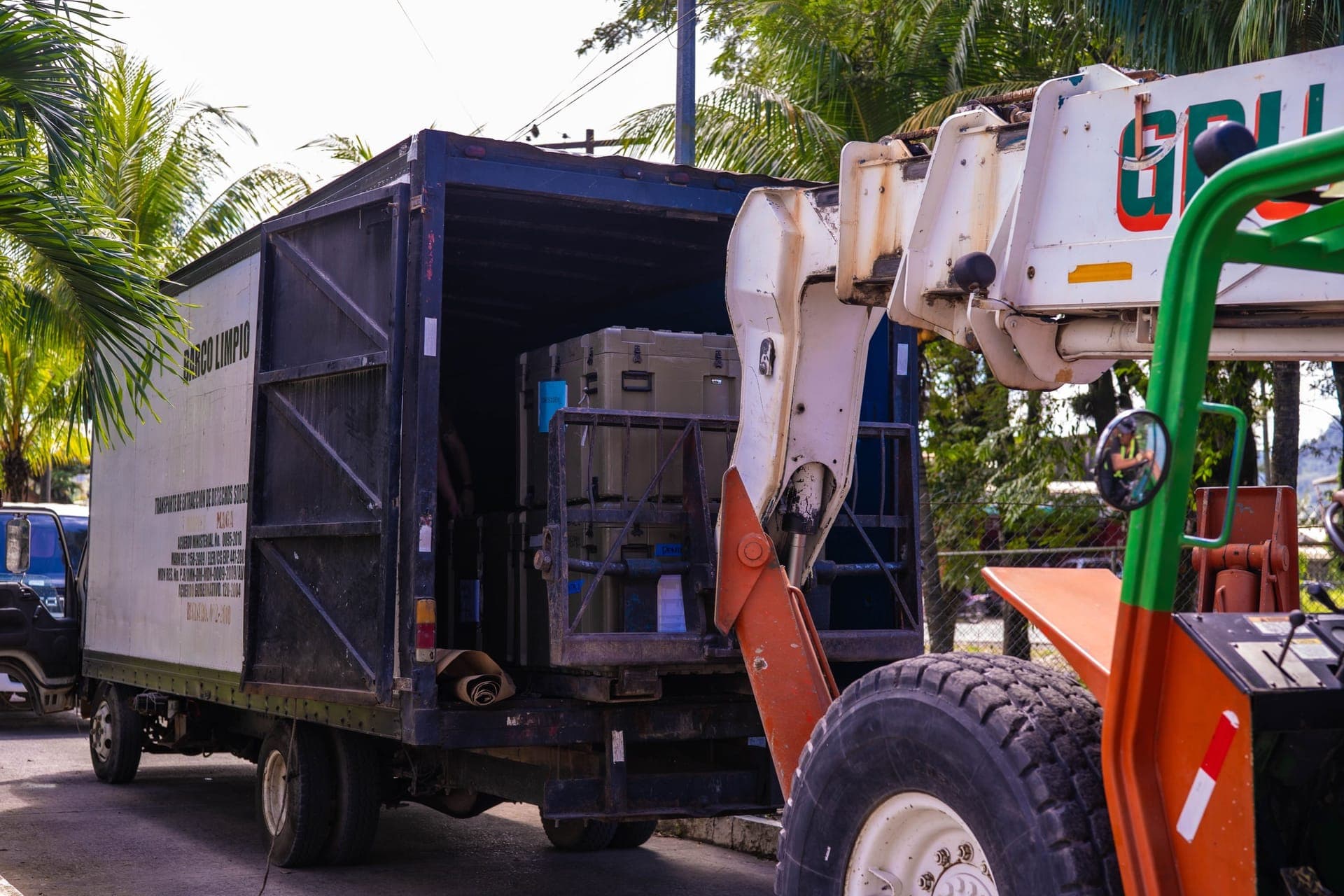
How to Transport Power Transformers and High-Voltage Equipment Safely
Moving a power transformer or another piece of high-voltage equipment is not a routine freight assignment. These assets can be exceptionally heavy, difficult to replace, and sensitive to impacts or movement. Their dimensions may also exceed the limits of conventional roads, bridges, railcars, and handling equipment.
Safe transportation therefore begins long before the cargo leaves its point of origin. It requires engineering input, route validation, permits, specialized equipment, and continuous coordination from pickup through final placement.
Why High-Voltage Equipment Requires Specialized Logistics
Large transformers are designed to operate in fixed installations, not to move through standard freight networks. Depending on the equipment and project, transport may require a heavy-haul trailer, a specialized railcar, a barge, or a carefully coordinated combination of modes.
The challenge is not limited to weight. Shipment teams must account for the complete transport envelope, axle loads, ground pressure, turning radius, overhead clearance, bridge capacity, road conditions, and access at the destination. Bushings, radiators, conservators, and other accessories may need to be removed and shipped separately under their own protection plan.
When these factors are treated as isolated tasks, risk increases. A safe move depends on managing them as one integrated operation.
Start With Accurate Cargo and Site Data
Every transport plan should begin with verified technical information. The logistics team needs confirmed dimensions, weight, center of gravity, lifting points, support requirements, and manufacturer handling instructions. Assumptions made at this stage can lead to an unsuitable trailer, an unsafe lift, or a route that cannot accommodate the load.
Site surveys are equally important. Teams should assess the loading area, delivery point, crane position, ground stability, and the space required to maneuver. At an operating substation or generation facility, the plan must also reflect site access controls and coordination with technical personnel.
Validate the Route Before Mobilization
A route that appears viable on a map may fail in the field. Heavy-haul route planning requires physical verification of bridges, road widths, gradients, curves, intersections, overhead utilities, seasonal restrictions, and areas where traffic management may be necessary.
The selected route should also include realistic alternatives. Weather, construction, road closures, or permit conditions can affect execution after planning is complete. Identifying contingency routes and decision points in advance helps prevent an unexpected obstruction from becoming a prolonged project delay.
For multimodal shipments, the interfaces between port, barge, rail, and road deserve particular attention. Each transfer introduces another lift, handoff, and opportunity for damage or delay.
Coordinate Permits, Equipment, and Stakeholders
Oversized and overweight transport normally requires approvals from the relevant authorities. Requirements vary by jurisdiction and may include route-specific permits, escorts, restricted travel windows, bridge reviews, and temporary management of signs or utilities.
These approvals must align with the availability of cranes, trailers, rail equipment, crews, and destination teams. A permit is only useful if every other resource is ready within the permitted operating window.
Clear responsibility is essential. The shipper, carrier, manufacturer, site operator, engineers, authorities, and local field teams should understand who controls each stage and how changes will be communicated.
Protect and Monitor the Equipment in Transit
Cargo protection should follow the manufacturer’s requirements and the conditions expected along the route. This may include engineered securement, weather protection, moisture controls, and monitoring devices that record shock, vibration, or tilt.
Monitoring does not replace careful handling, but it provides visibility into what the equipment experienced during transit. If a threshold is exceeded, the project team can pause, inspect, and determine whether additional technical assessment is required before installation.
Pre-departure and arrival inspections should be documented. Photographs, condition records, seal checks, and monitoring data create a clear chain of custody and support faster decisions if a concern arises.
Plan the Final Delivery as Carefully as the Main Move
The last miles often present the greatest constraints. Access roads may be narrow, unpaved, or unable to support the loaded vehicle without reinforcement. Space inside the facility may be limited, and the final position may require coordinated jacking, skidding, craning, or transloading.
The delivery team should confirm ground preparation, lifting capacity, exclusion zones, unloading sequence, and emergency procedures before the convoy arrives. Final placement is part of the transport operation, not a separate activity to solve at the gate.
Waypoint supports Power & Energy logistics through specialized high-voltage transport and project logistics management. By connecting engineering requirements with field execution, organizations can reduce handling risk and keep critical infrastructure projects moving.
FAQs
What information is needed to plan transformer transportation?
Teams need verified weight and dimensions, center of gravity, lifting and support points, manufacturer instructions, origin and destination conditions, and route constraints.
Can a large transformer travel by regular truck or railcar?
Often it cannot. The appropriate mode and equipment depend on the transformer’s weight, dimensions, route, and applicable regulations. Large units may require purpose-built heavy-haul or rail equipment.
Why is a route survey necessary?
A route survey confirms whether bridges, curves, gradients, clearances, roads, and site access can safely accommodate the complete transport configuration.
Operating in Venezuela? Waypoint delivers the logistics.
Expeditionary logistics, secure transport, and field support for complex environments — planned and executed on the ground.